Design PhilosophyMake the thinking intentional.
Make the experience useful.
Make the complexity feel simple.
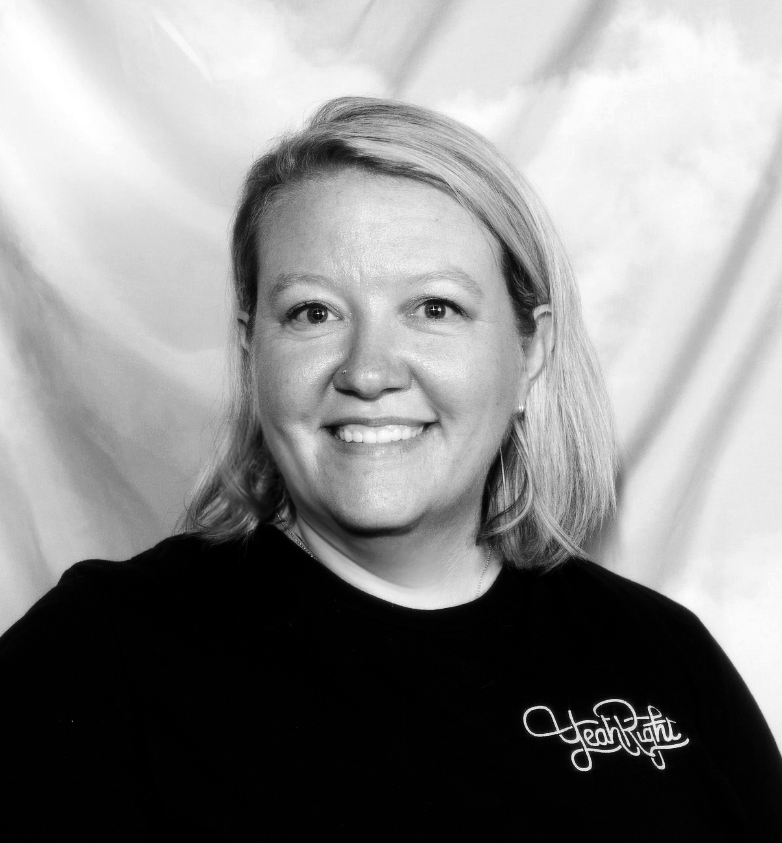
About Me
I’m usually the person asking the question before the question.
Before we redesign the website, what actually needs to change?
Before we build the feature, what problem are we trying to solve?
Before we jump to a solution, what do we know—and what are we assuming?
I’ve been designing for almost twenty years. I started in print and branding, moved into advertising, and eventually into UX and product design. I like being able to move across all of it: have the stakeholder conversation, pull the pieces apart, turn what I’m hearing into a framework, then make something tangible enough for people to react to.
Looking back, it’s been the same job the whole time: making rules other people can build from. I’ve designed identity systems for most of my career. One client (a nonprofit) is still using their brand more than a decade later. The same instinct later turned into building playbooks, component libraries, and most recently, the architecture behind a children’s hospital website.
That’s where I’m at my best—when the problem is complicated, the path forward isn’t obvious, and a team needs someone to make sense of it and turn it into something they can move on.
“The client is not easily impressed, but when they knew Nicole had been assigned to a particularly difficult task, their anxiety and fears went away.”
Phaedon Hain, Human-Centered Design Lead, TISTA Science & Technology
A lot of my recent work has been in the healthcare space: a pediatric hospital, a merged health system. Before that, a federal program for the Centers for Medicare & Medicaid Services. I like work where the stakes are real, the constraints matter, and “just make it look better” isn't really the problem.
What I Do
Information Architecture
Especially for large, complicated sites where the structure evolved over time instead of being designed
Design Systems
The structure, rules and tools that let a team work consistently and move faster, including one built so we could prototype and test new ideas with AI
Accessibility programs
Not just identifying problems, but figuring out how thousands of issues actually get prioritized, assigned, fixed and maintained
Implementable Strategy
Specific enough that the work doesn't fall apart once the deck is done
Facilitation
Research sessions, ideation, prioritization, and helping a room full of different perspectives get to a direction
AI-Accelerated Design
AI helps me synthesize research, explore ideas, prototype and test faster
Judgment
What I don’t outsource is judgment.
Understanding the audience. Framing the problem. Knowing what matters. Seeing the tradeoffs. Asking whether what we made actually solves anything.
I mentor a designer now, and teaching has become one of my favorite parts of the work. Earlier in my career I spent years on visual craft. That work picked up eleven awards, including Gold and Silver Addys and a BrandNew award for an identity system. Learning to make things well is what makes a system worth building.
Outside of work, I enjoy good food, making hand-built ceramics, reading in my hammock and planning trips in significantly more detail than anyone requires.
If you’re working on something complicated and you’d rather start with the question than the deliverable, I’d like to hear about it.
LOVES
Type Nerd
•
Roads Maps
•
Peppermint Patties
•
Maggie Waffles
•
New Order
•
Office Supplies
•
Wandering
•
Big Cities
•
Billy Corgan
•
Rad Nails
•
The Library
•
Americanos
•
Night Moves
•
Sweaty Dancing
•
Concerts
•
Type Nerd • Roads Maps • Peppermint Patties • Maggie Waffles • New Order • Office Supplies • Wandering • Big Cities • Billy Corgan • Rad Nails • The Library • Americanos • Night Moves • Sweaty Dancing • Concerts •